Distribution Is the New Bottleneck
Making it is easy now. Getting it seen is the hard part. The numbers behind the AI supply shock, and what builders should do about it.
 growth
The cost of building software fell off a cliff. The cost of attention did not. That asymmetry is the whole game now.
If you can build anything, the edge is distribution: the audience, the channel, the reason anyone shows up. Here is what the supply shock looks like in numbers, and what I think builders should do about it.
Supply: building got radically cheaper
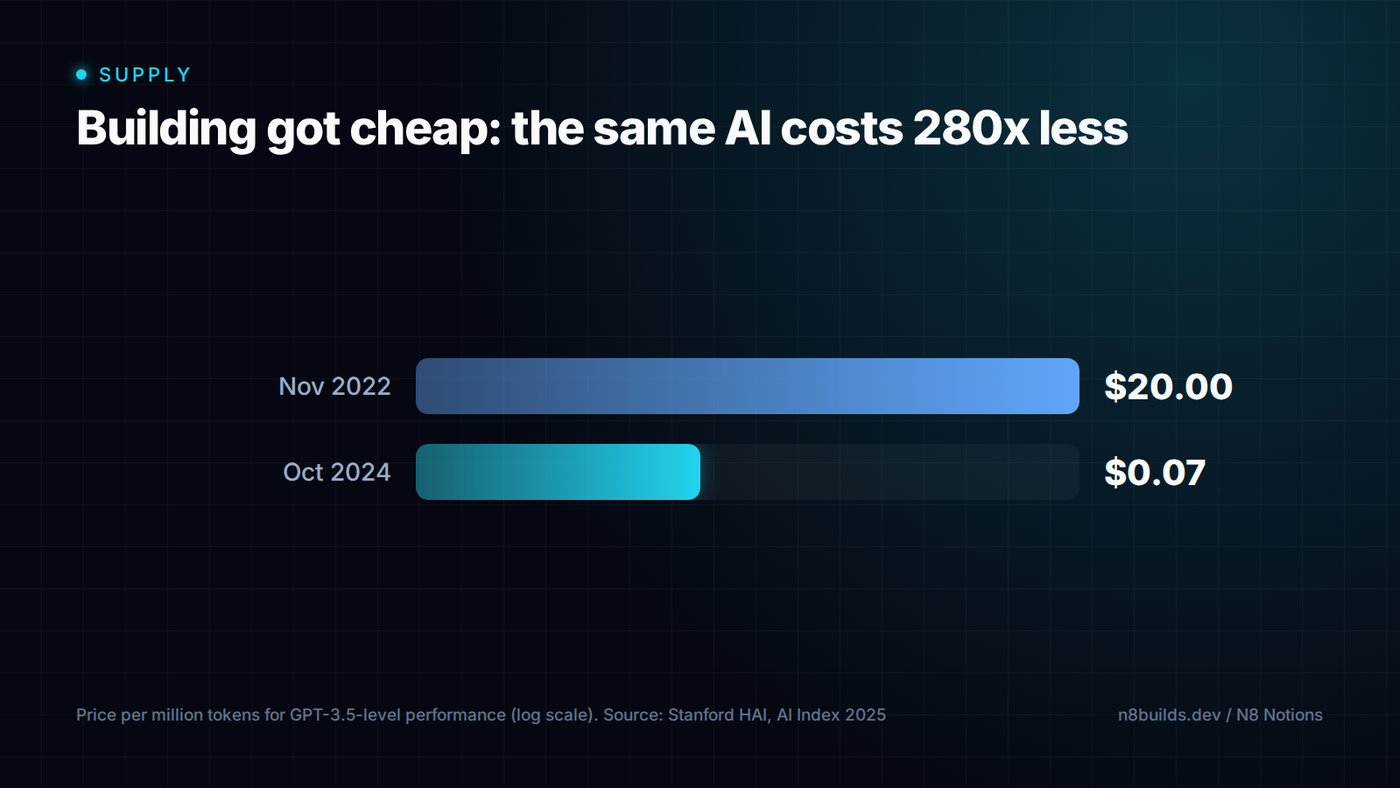
Start with the raw input. Stanford's 2025 AI Index found that the cost of running a model at GPT-3.5's level of performance dropped more than 280-fold in about two years, from roughly $20 per million tokens in late 2022 to about seven cents by late 2024. Andreessen Horowitz described the trend as "LLMflation": for a fixed level of capability, the price has been falling about 10x per year.
Cheaper models made coding agents practical, and the agents changed who ships. In March 2025, Y Combinator CEO Garry Tan said that for about a quarter of YC's current startups, 95% of the code was written by AI. Skeptics rightly point out that this skips the human review and debugging, but the direction is not in doubt.
The flood
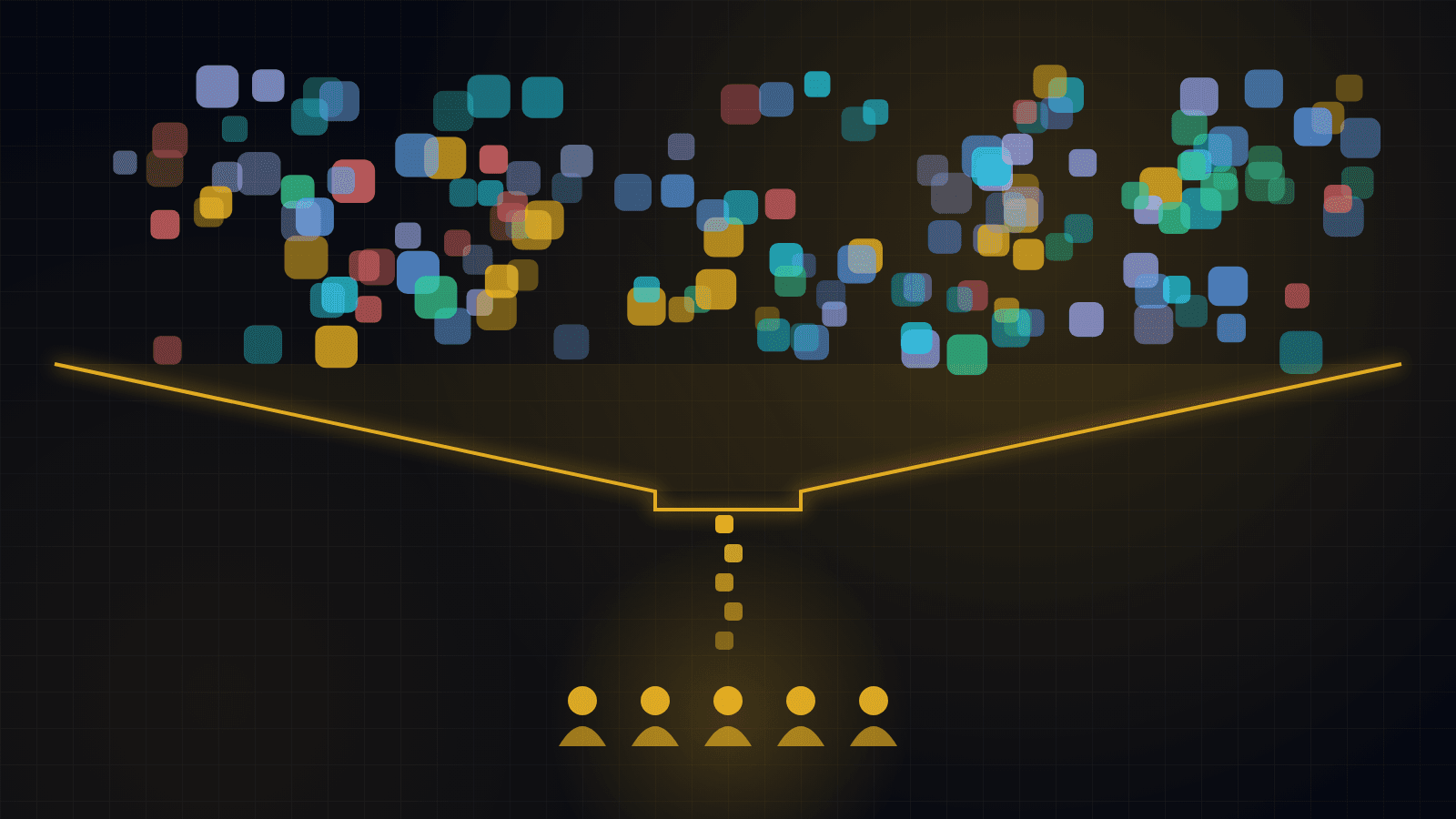
When building gets that cheap, you get more of everything.
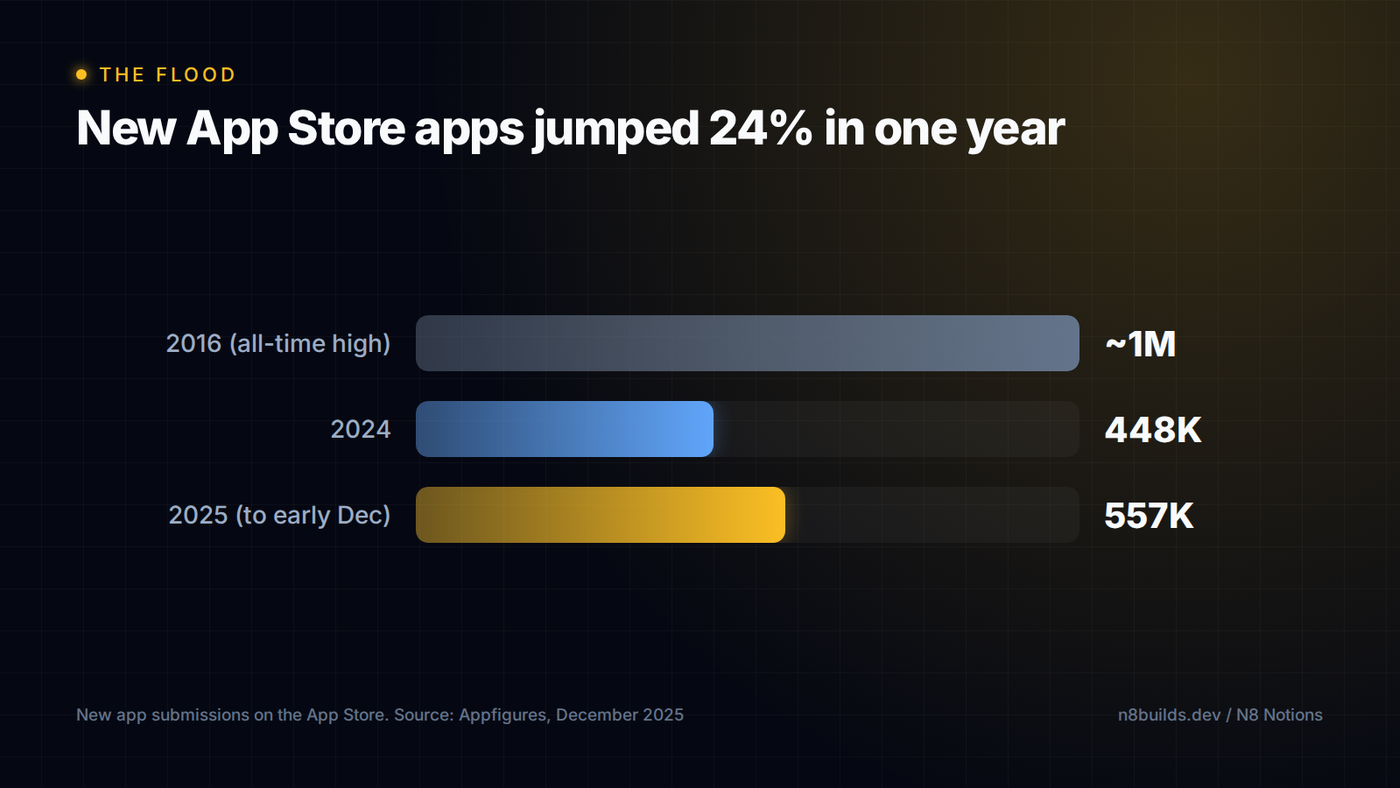
Appfigures reported that Apple's App Store saw 557,000 new app submissions in 2025 (counted through early December), up 24% from 448,000 in 2024. It was the first meaningful increase since 2016, and Appfigures pointed to AI-powered development tools as part of the reason. It also noted, bluntly, that these apps are not necessarily competitive on features or experience.
That last point is the important one. The number of things competing for attention is going up fast. The amount of attention is not. Everyone still has the same 24 hours, the same feed, and the same handful of apps they actually open every day.
In an age of infinite supply, the moat is demand.
Why "build it and they will come" is dead
For most of software history, the ability to build was itself a filter. If you could ship a working product, you had already beaten most of the people with the same idea. That filter is mostly gone. A weekend and a coding agent can produce a convincing clone of almost anything.
So the questions that decide whether a product lives have shifted:
- Who already knows you exist? A launch to an empty room is just a deploy.
- Why would they switch? "It does the same thing with AI" is no longer a reason.
- Where do they hear about it? A channel you own (an audience, a newsletter, a community) beats one you rent (ads, app store search) because the rented ones are flooding too.
- What can't be copied in a weekend? Usually it is trust, taste, data, or a relationship, not features.
What I am doing about it
This is a big part of why n8builds exists at all.
- Build the audience before the product. Streaming and writing in public means each new project starts with people who have watched it get made.
- Make the process the content. The build log is the marketing. It is honest, it compounds, and it is hard to fake.
- Treat distribution as a feature. For every project I now ask "how will the first 100 people find this?" before I write the first line of code, and the answer shapes what I build.
- Pick problems where trust matters. Local-first tools like Scribe, where "your voice never leaves your PC" is the whole point, are harder to out-clone than a thin wrapper around an API.
The upside
None of this is a complaint. Cheap building is a gift: more people can make the thing they wish existed, and experiments that used to cost months now cost days. It just means the hard part moved. The builders who win the next few years will be the ones who treat attention as seriously as they treat code.
Sources
Share this note
Share on X (opens in a new tab)