







Who Am I?
A two-player guessing game: each of you gets a secret identity, a famous person, a character or a mascot.
You can see the one your opponent is guessing, never your own.
Two phones at the Table, one round, recorded at once.
Pictures
How a round goes
- Start a party at the Table and pick Who Am I?. The host picks a category, the hints and how long the match runs.
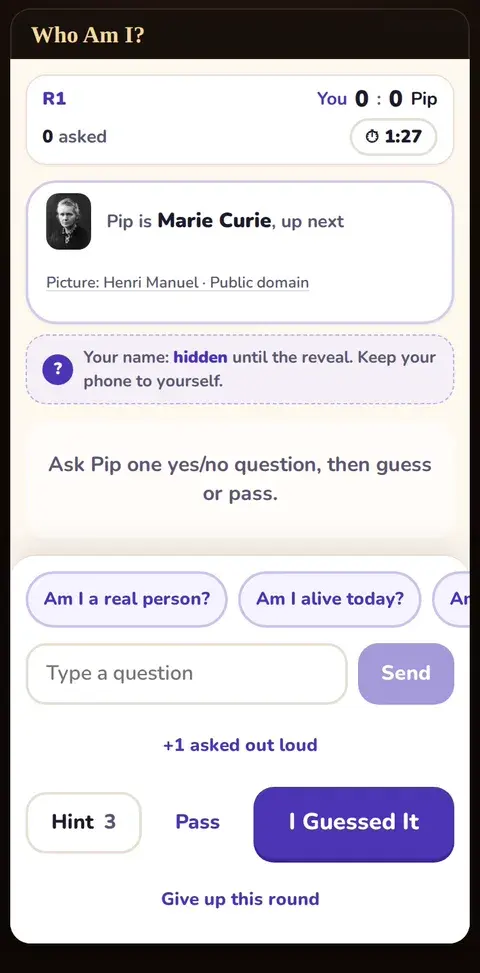
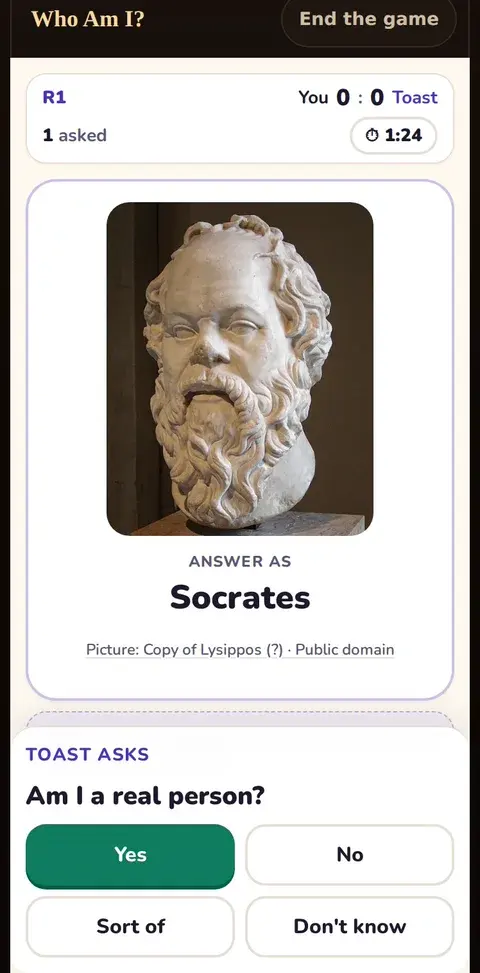
- Each phone shows the other player's name and picture, and yours as hidden.
- On your move, ask one yes or no question, out loud or in the app. The other player answers on their phone; then guess or pass.
- Stuck? Up to three hints, vague to strong. Say your guess and tap I Guessed It; they confirm it.
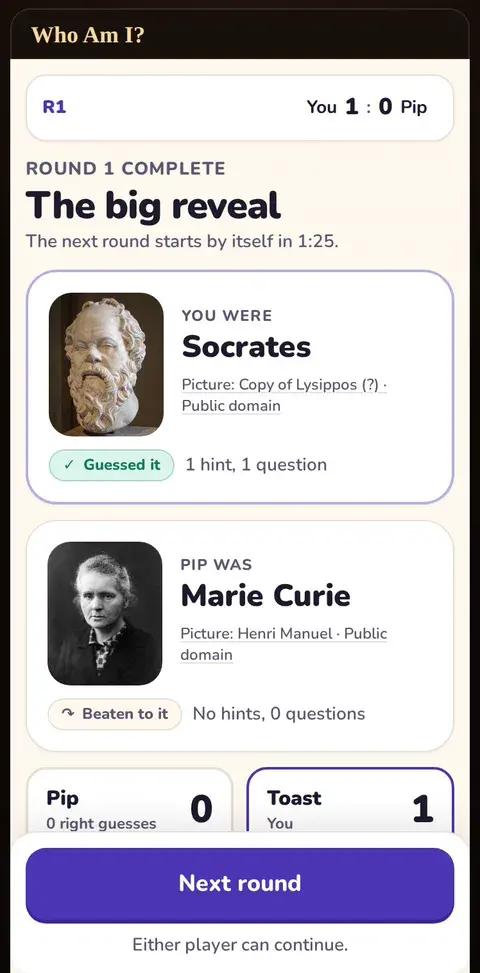
- The big reveal shows both names. Anyone else at the Table watches the match.
How it's made
The secret stays on the server
Your own identity never reaches your phone before the reveal. Every message is built for one player.
One room, one Durable Object
The room is the game server: hibernating sockets, and one alarm for the turn timer and the room closing.
Tested for leaks
Browser tests record every response and socket frame, and check your name never arrives early.
Phone comforts
The screen stays on, the other phone says when you step away, and a sound and a buzz mark your turn.
A result card
Share result paints a picture of the match in the browser: names and scores, never an identity.
No account
One player creates a room, the other opens the link, and you are playing in under 30 seconds.
Credit
The pictures
Most identities have a picture: real people have a free photo or portrait from Wikimedia Commons, chosen by hand, and the phone loads it straight from Wikimedia, with its author and licence.
The game itself is MIT licensed.